
Personal finance experts frequently tout the advantages of having a six month emergency fund, if not a more conservative twelve month fund. There are many reasons that a citizen would need to dip into their emergency savings: family illness, death, severe medical expenses, unplanned pregnancy or job loss to name a few. Many reports however, indicate that many (>25% or >50% depending on your definition) Americans still are not prepared for a downturn scenario. Enter payday lending, a last-ditch option which makes economic sense.
Why this occurs is unclear. Perhaps it is the effect of a lingering economic malaise, a re-leveraging consumer debt market or a tendency to think too much about the present. One of the more likely reasons, however, is that many households simply do not have the capacity on the income side to maintain their lifestyle and are not prepared to make the sacrifices.
Payday Lending: An Emergency Line for the Unprepared
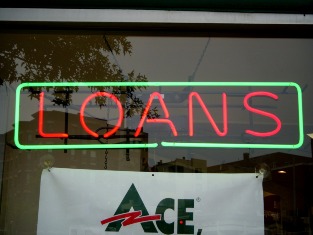
High APRs Can Guarantee Near 100% Approval
For households that encounter an event that would cause a need to jump into emergency savings, there are very few outlets to pursue. One is through Chapter 7 bankruptcy, which costs around $300. One of the benefits of this outlet is that medical expenses are treated as typical unsecured lending and are usually discharged (actual discharge rules are usually dictated by the states or the individual bankruptcy judge). I would, however, carefully weigh the pros and cons of declaring bankruptcy. With the recent changes to bankruptcy laws in 2005, an individual is only allowed to declare Chapter 7 once and this stays on your record for seven years, making it extremely difficult to secure lending for a car loan or house in the meantime. This would make the need to develop an emergency savings reservoir even more pressing (what if your car breaks down?) without the option for a second bankruptcy. Secondly, if the household contains a chronic debt using high earner, Chapter 7 has a means test proving that you have a low enough income not to be forced into Chapter 13. Chapter 13 strictly monitors your budget over a three- to five-year span and forces may obligations to remain in your name. Often, for high income earners this is the only option, but creditors do look at Chapter 13 bankruptcy as a slightly better indicator than Chapter 7.
Bankruptcy is a daunting ordeal and this writer would personally not suggest it if simply avoiding massive amounts of debt and tightening the household budget will do. There are cases, however, that with low revolving credit limits and low debt a massive medical bill or legal fee may warrant the need for short-term money. Traditional unsecured lending, such as credit cards, have stricter underwriting requirements (perhaps due to the fact of their federal regulation) and it may be difficult to qualify in time to address your short term funding gap. Secured lending, such as opening a HELOC or taking out a HEL, further leverages you and adds risk. Another issue: again, the time needed to obtain this funding may be too long and many households don’t own a home (or have $0 equity)!
Short-term money is then best handled by an institution specializing in short notice liquidity - such as a payday lending company or even a pawnshop (which issues secured loans). As a means to overcome a very short-term and infrequent shock to an individual household that it simply cannot withstand, payday lending is a far superior alternative to bankruptcy. So long as a household has the proper budget and standard inflows (income) outweigh standard outflows (expenses, rent, etc), then a payday loan is a decent answer to short-term liquidity issues. For many in this country there is no better option.
If any family budget is entirely dependent on payday loans to fuel their current lifestyle, sacrifices need to be made to avoid a debtor’s prison, consistently paying very high short-term debt fees. Some regulators target payday lending as a usurious form of lending, but I find it hard to personally condemn an industry where some estimates have placed a 30-day default rate at only around 6%, even after providing individuals the short-term liquidity that they need in times of desperation. What's worse - high APR borrowing... bankruptcy... or black market loan sharking? You be the judge.
So the next time you're shaking your head at a payday loan sign - consider the alternatives.
Cheers,
Cameron Daniels
